
written by Nasra Farah
From Rainforests to the Serengeti
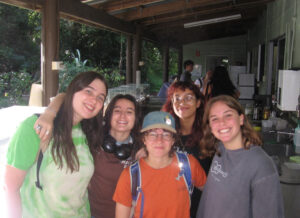
For Aida Yoder, studying abroad wasn’t just about traveling. It was about immersing herself in ecosystems, cultures, and conservation work across the globe. Majoring in Sustainability and Environmental Studies with a minor in Anthropology and a concentration in Conservation Science and Interpretation, she was able to study abroad during her junior year spring semester and summer. Aida’s study abroad journey took her to two vastly different yet equally transformative environments: the rainforests of Queensland, Australia, and the savannas of Tanzania.
Living and Learning in the Australian Rainforest
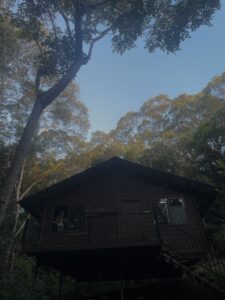
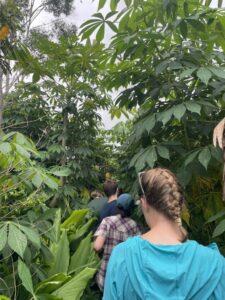
Aida’s first experience abroad brought her to a remote field station in Queensland through her program with the School for Field Studies (SFS). There she spent five months on their Rainforest to Reef program, studying rainforest and reef ecology in the Wet Tropics. Living deep in the rainforest, her home consisted of eight-person cabins on stilts that were around a 15-minute walk from the main station. 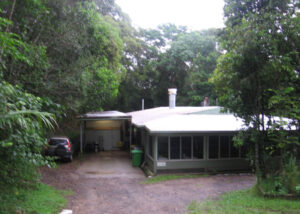
Her cohort of 25 students split their time between coursework and research. During the first half of the semester, Aida took classes in Tropical Biome Ecology, Wildlife Conservation in the Tropics, and Socio-Environmental Politics. The second half focused on research, where she was able to develop an ethnobiological field guide in collaboration with the Mbabaram Aboriginal community.
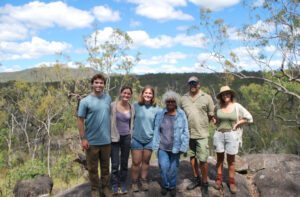
This project blended science with cultural knowledge. Aida conducted biodiversity surveys where she studied dung beetles, reptiles, marsupials, and plant species. All the while, also documenting the cultural significance of local flora and fauna. She worked closely with Mbabaram community elders, ultimately presenting the field guide for their review. The experience gave her a deeper understanding of ethnobotany, bush foods, and traditional medicine. Along with the importance of preserving Indigenous knowledge and language.
Daily Life in the Rainforest
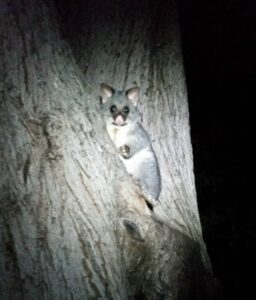
Daily life in the rainforest came with many surprises. From spotting marsupials at night using powerful lights to encountering snakes near her cabin. Aida was quick to adapt to the unpredictability of her surroundings. One of her most memorable moments came when her group discovered a massive stick insect in the bathroom. It was later identified as an undocumented species after she uploaded it to iNaturalist.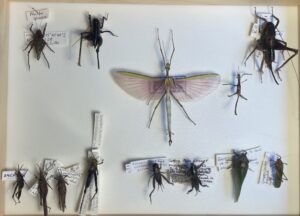
Then there were the terrestrial leeches. Despite being warned by SFS prior to arriving about the leeches, nothing prepared her for the reality. Leeches are typically found in bodies of water, but in the rainforest this may not always be the case. They can live on the land, in the trees, and sometimes would come down when it rained. Throughout her time in Australia, she found a total of 47 leeches on her body, ultimately earning her the nickname “Leech Monarch” by her classmates.
Still, the challenges were outweighed by unforgettable experiences. She snorkeled along the Great Barrier Reef, observing tropical fish, turtles, and reef ecosystems up close. She also participated in reforestation efforts, planting trees near an inactive volcano and learning about syntropic farming. This is a regenerative farming method that mimics natural ecosystems by planting species like banana and cassava together to support mutual growth.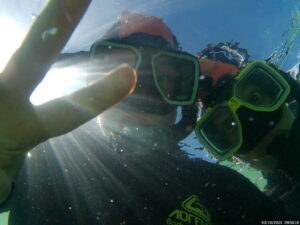
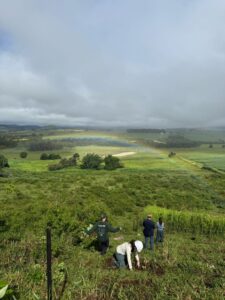
Aida’s study abroad journey brought her to Australia in part because it had always been a dream of hers to see the Great Barrier Reef. As one of her first experiences abroad, the English-speaking environment in Australia also made it feel accessible. What she didn’t expect, however, was just how much the experience would push her academically, physically, and personally.
Conservation in Action in Tanzania
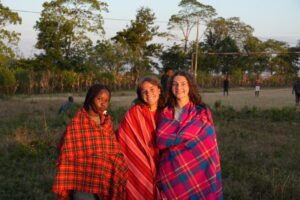
Following her semester in Australia, Aida traveled to Arusha, Tanzania for a month-long SFS program. This program focused on Wildlife Management Studies and large carnivore research.
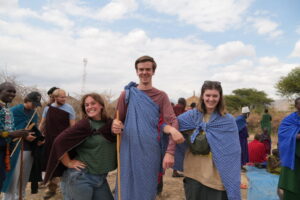
This program was split into two main components: studying carnivore behavior and addressing human-wildlife conflict. In Tarangire National Park, Aida tracked lions using radio telemetry. This technique analyzed their movements and home ranges to better understand the lions’ interactions with nearby human populations. 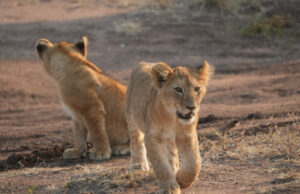
A significant portion of her work focused on the relationship between large carnivores and Maasai pastoralist communities. In Tanzania and Kenya, many Maasai rely on livestock for their livelihoods. However, as prey species decline, predators like lions, leopards, and hyenas increasingly target livestock. This ultimately leads to conflict and, at times, retaliation against these animals.
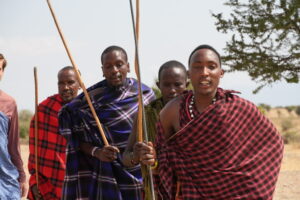
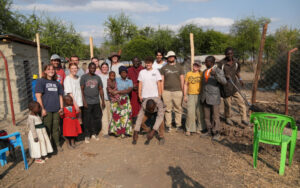
During Aida’s study abroad journey in Tanzania, she contributed to conservation solutions by helping design and build fortified livestock enclosures, known as bomas. These structures are specifically engineered to deter predators. They use reinforced materials to prevent hyenas from digging underneath and barriers on top to stop leopards from climbing over. These efforts aim to protect both livestock and carnivores, promoting coexistence rather than conflict.
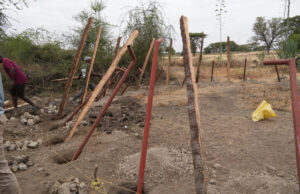
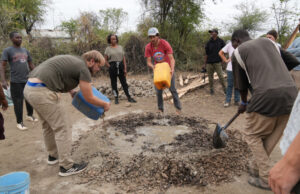
Her time in Tanzania also exposed her to the deep cultural traditions of the Maasai, as well as broader conservation challenges shaped by history, policy, and economics. She learned how education and community collaboration are essential to sustainable conservation efforts.
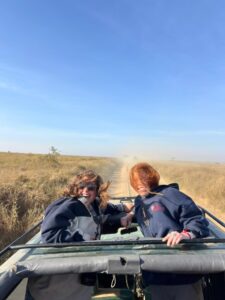
Of course, there were also unforgettable wildlife experiences. While exploring the Ngorongoro Crater, Aida saw rhinos and all members of the “Big Five” in a single day. In the Serengeti, she witnessed the Great Migration, observed lion cubs and black-maned lions, and watched giraffes fight on the open plains. One moment that stood out was seeing a leopard haul its prey into a tree, which was a powerful reminder of the rawness of the natural world.
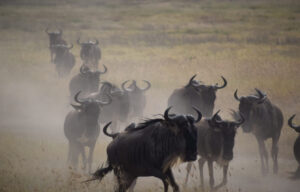
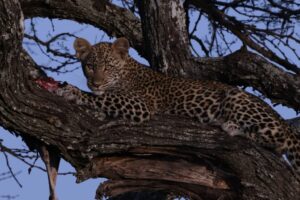
Living at a field station in Karatu, Aida balanced classroom learning with fieldwork. While she admits the food was sometimes a challenge, the experience of living and learning in such a dynamic environment made it all worthwhile.
A Global Perspective on Conservation
Together, these two programs reshaped Aida’s academic and professional trajectory. She is now continuing her research back on campus for her senior thesis, building on the work she began abroad in Tanzania.
More importantly, these experiences broadened her worldview. “You can’t change the world unless you see it,” she reflected. From the rainforests of Australia to the plains of Tanzania, Aida gained not only scientific knowledge but also a deeper appreciation for cultural perspectives and global interconnectedness.
Advice for Future Study Abroad Students
Aida encourages students not to let fear hold them back. Whether it’s the remoteness of a field station, concerns about food, or uncertainty about being far from home, she emphasizes that growth comes from stepping outside your comfort zone.
“Don’t limit yourself,” she advises. “The world is so much bigger than you think and it’s worth experiencing.”
To learn more about other study abroad stories, check out more blogs on our site here.